

Two million. Every second. Even while you sleep.
That is approximately how many aging red blood cells the average adult removes and replaces every second. Across an entire day, estimates approach 200 billion red blood cells. While you are reading this paragraph, millions have already completed their service, and millions of replacements are joining the workforce. Your body’s renewal business never closes. (pmc.ncbi.nlm.nih.gov, pubmed.ncbi.nlm.nih.gov)
These tiny oxygen couriers help keep your brain thinking, your muscles moving, and your organs functioning. Inside your bones, your bone marrow continually builds their replacements. It is a breathtaking biological operation—and every new cell requires the right building materials.
Your Body Recycles Brilliantly—but Still Needs Nourishment
Fortunately, your body is an exceptional recycler. It recovers much of the iron from old red blood cells and uses it again. Those billions of retiring cells do not represent billions of cells’ worth of nutrients disappearing from your body each day. Nevertheless, recycling cannot eliminate your need for food: good nutrition supplies essential nutrients, replaces actual everyday losses, and supports the continuous work of maintenance and renewal. (pmc.ncbi.nlm.nih.gov)
Think of your body as a magnificent home undergoing constant renovation. Skilled workers can reuse valuable materials, but they still need reliable deliveries to keep the work moving.
What Goes on the Supply List?
Several nutrients help support normal red blood cell formation:
- Iron: A component of hemoglobin, the protein that carries oxygen.
- Vitamin B12 and folate: Help developing cells make DNA and divide properly.
- Vitamin B6: Supports production of heme, the iron-containing part of hemoglobin.
- Copper: Helps your body handle and use iron normally.
- Protein: Supplies amino acids used to build hemoglobin and other essential proteins.
Vitamin C: Helps your body absorb iron from plant foods. The message is bigger than blood alone: your body is constantly maintaining, repairing, and renewing itself. Nourishment provides the materials that make that work possible.
Feed the Factory—Every Day
Build meals around a variety of vegetables, fruits, beans, lentils, whole grains, and appropriate protein sources. Pair plant sources of iron with vitamin C-rich foods—such as lentils with bell peppers or beans with tomatoes. Consistency matters. Your body’s maintenance schedule runs daily, so make nourishing meals a regular habit.
Where a Multivitamin Can Help
Even a thoughtful eating routine can leave certain nutritional gaps. When appropriate for your individual needs, a multivitamin can supplement the vitamins and minerals your diet may be missing, helping supply some of the raw materials involved in normal cellular function. It complements food; it does not supply everything a balanced diet provides. (ods.od.nih.gov)
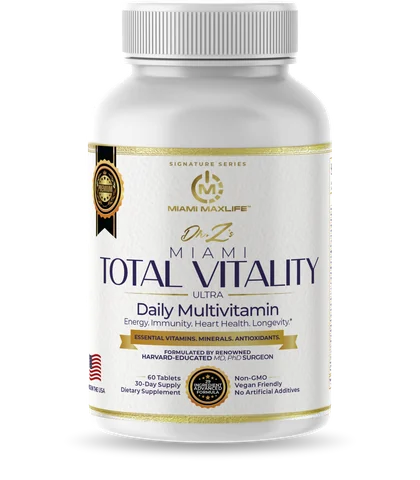
Dr. Z’s Miami Total Vitality Ultra can be considered as part of that broader conversation about daily nutritional support. Review its Supplement Facts alongside your meals and other supplements to determine whether it fits your needs. A multivitamin is nutritional support—not a medicine, cure, or treatment. More is not automatically better, and extra iron should not be taken simply because you feel tired. Persistent fatigue deserves medical evaluation. (nhlbi.nih.gov)
Dr. Z’s Takeaway
Your body’s ability to renew itself is extraordinary. Give it the everyday nourishment that extraordinary work requires.
Two million red blood cells clock out every second. Their replacements are already reporting for duty. With a workforce like that, the least you can do is keep the cafeteria stocked.
For educational purposes; not a substitute for individualized medical advice. Prepared for medical review by Dr. Z, MD, PhD, Cardiovascular